
To understand how biological medicines differ from other medicines, it helps to compare them to more common medicines that you may be familiar with, those made by chemical processes.
| Chemical medicines | Biological medicines | |
| Example | Aspirin | Infliximab |
| What do they look like under a microscope? | Small and simple, made up of 21 atoms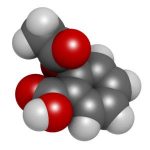 | Very large and highly complex, made up of more than 20,000 atoms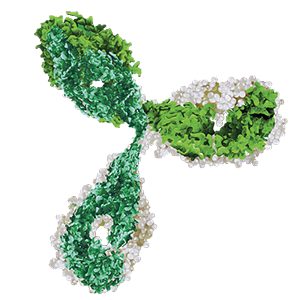 |
| How are they made? | Simple chemical process | Complex biological process using the latest technology to modify the genes to produce the active ingredients for the medicine |
| How do you take them? | Commonly taken as pills | Cannot be made into a pill and are given as an injection or infusion instead |
| Can we make copies? | Yes, the active ingredient will be 100% identical across all batches | No, we cannot make identical copies of biological medicines. It’s normal to find minor differences between batches of the same biological medicine |
| What are new brands of the same medicine called? | Generic medicine | Biosimilar medicines |